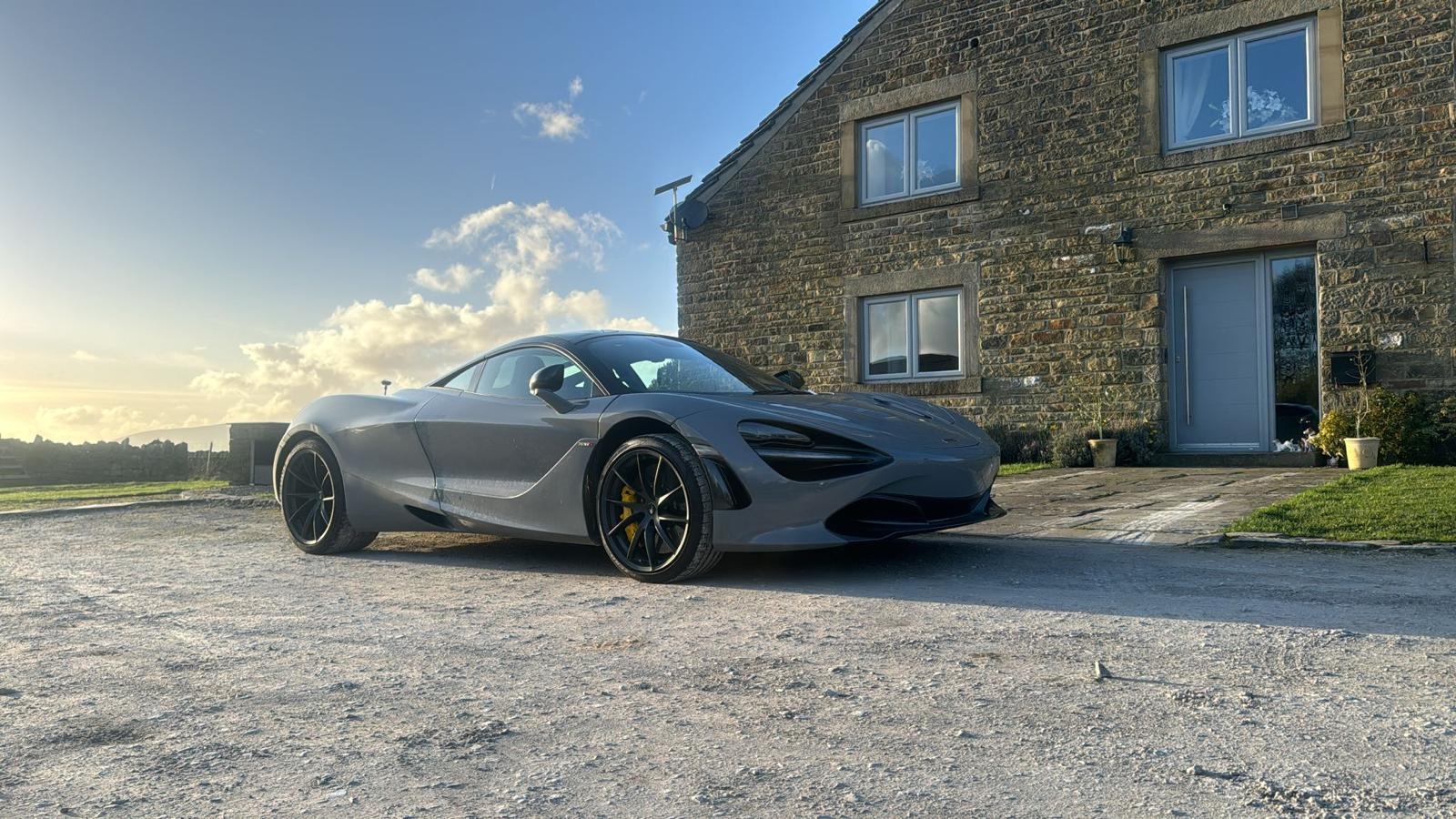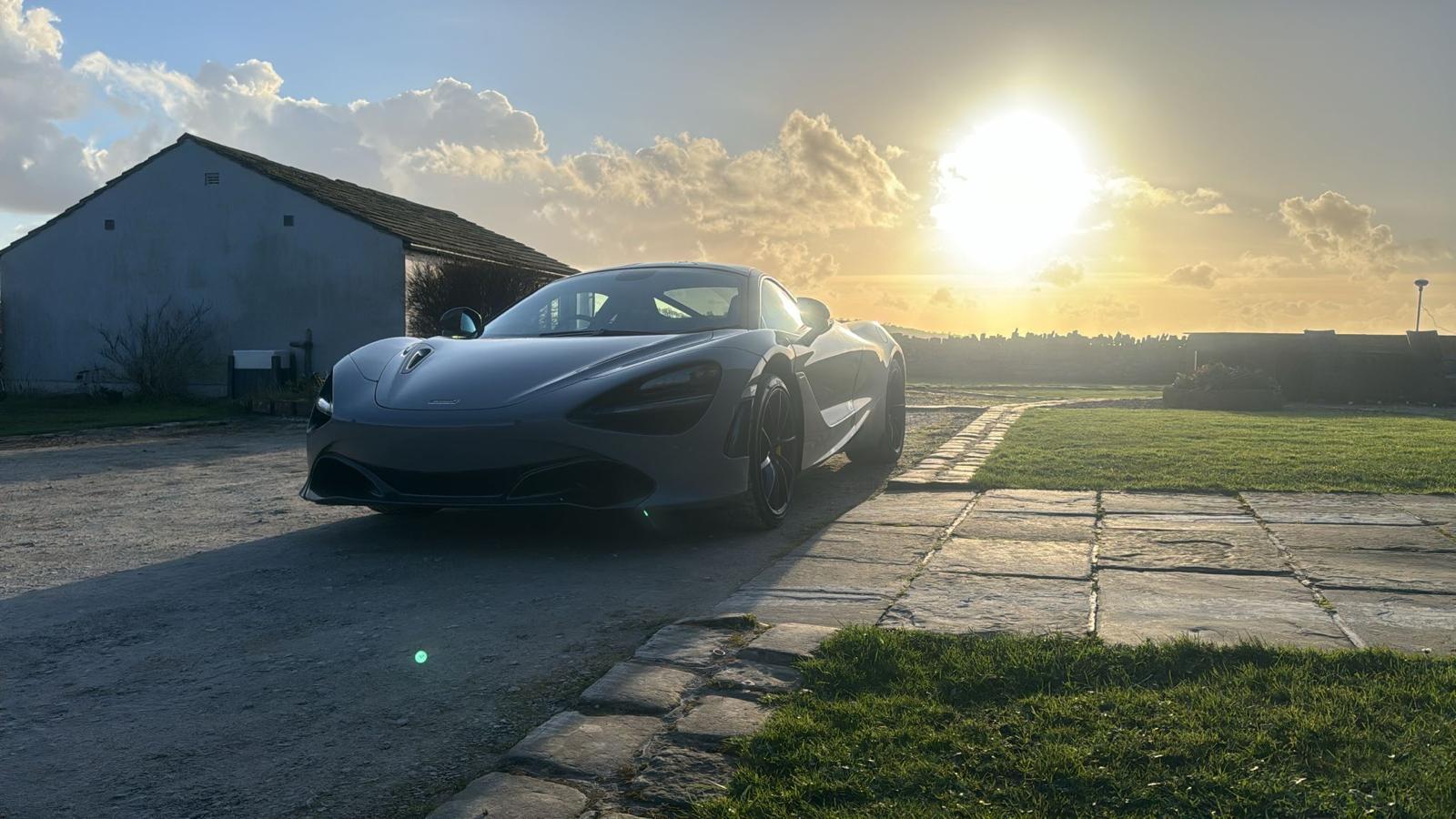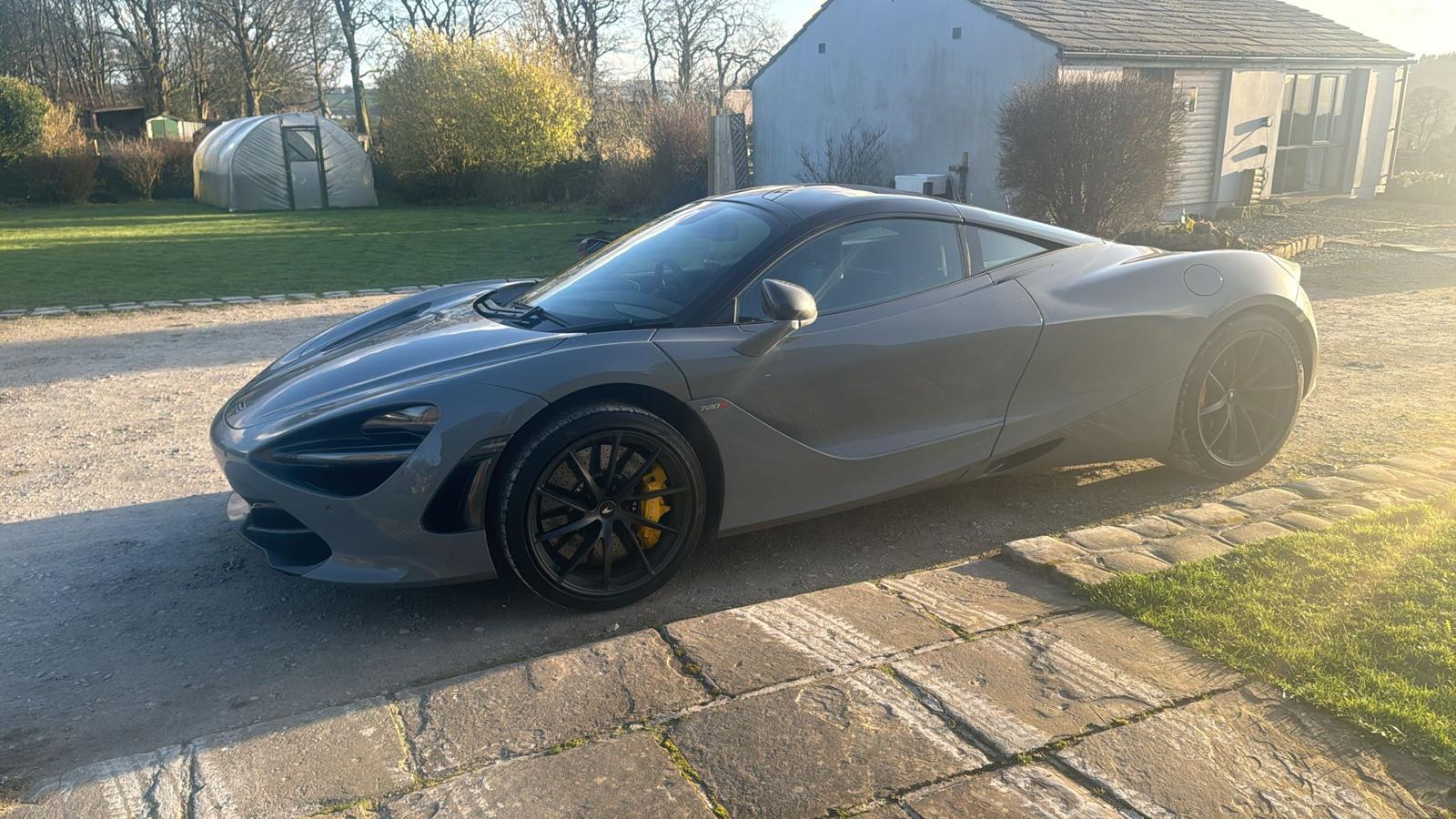
The first question we get from any production company that's never shot in the North of England before is usually the same: "Where do we go?" The honest answer is that the North West and the surrounding hills are genuinely one of the best parts of the country for automotive photography and film, and it's been hiding in plain sight for years while everyone else queues up to shoot the same five corners of the Cotswolds.
What you get up here is a combination that's hard to find anywhere else in England — empty B-roads with proper elevation changes, dry-stone walls and moorland that look impossibly cinematic in any weather, almost no traffic outside summer weekends, and golden-hour light that lasts for nearly an hour rather than the ten minutes you get in a Surrey lane. We drive these roads constantly, both for our own location days and for client shoots. Here are the seven we keep coming back to.
1. The Trough of Bowland · Lancashire
The headline act, and the one we'd send anyone to first. The Trough of Bowland is a single-track road that climbs over the spine of the Forest of Bowland AONB, connecting the Ribble Valley to the village of Dunsop Bridge. It has everything: long sweeping uphill straights, dry-stone walls on both sides, dramatic moorland backdrops, and almost no traffic outside Sundays in August.
For shoots, the layby at the top of the pass is one of the best supercar photo spots in northern England — sweeping views in three directions and almost guaranteed isolation. Be aware: the road is genuinely narrow in places, the surface has some serious patches, and you'll need to plan around livestock. Best in late afternoon for the light and the quiet.
Nearest base: Clitheroe, 15 minutes east. Best for: hero shots, drone tracking, lifestyle stills.
2. Buttertubs Pass · Yorkshire Dales
Famous because the Tour de France went over it in 2014, and rightly famous for everything else. Buttertubs is a steep, narrow pass connecting Hawes in Wensleydale to Thwaite in Swaledale, named after the limestone potholes you can spot near the summit. The combination of hairpins, climbs, and sweeping drops down into the valley is hard to beat anywhere in England.
For shoot purposes, the southern descent into Hawes is the money shot — long sightlines, the road carving through open moorland, and a horizon that drops away beautifully. We've shot a couple of lookbooks up there and the photographs always look like they were taken in another country. The downside: it's a popular cycling route, so weekday shoots are dramatically better than weekend ones.
Nearest base: Hawes (own a small car park you can stage from). Best for: wide landscape shots, video tracking, dramatic weather days.
3. Hardknott Pass · Lake District
Hardknott is the most theatrical road in England, full stop. It's also one of the most challenging — gradients of 1-in-3, blind hairpins, and surfaces that are best described as "approximate." But for a shoot day with the right car and the right driver, it produces images you simply cannot get anywhere else in this country. Roman fort ruins on one side, sweeping Lake District fells on the other, and a road that looks like a piece of conceptual art from the air.
A few warnings. The road is genuinely demanding even in dry weather, and we wouldn't take a car over it in winter. The bottoms of the hairpins are scrape-prone for any low-slung supercar. And the road is closed periodically by the council, so always check before you commit a crew. When it works, though, it's the best automotive shoot location in the country.
Nearest base: Eskdale or Ambleside. Best for: hero brand campaigns, ambitious shoot days, anything that needs scale.
4. Snake Pass · Peak District
The A57 between Glossop and Sheffield, known as the Snake Pass, is one of the most consistently photographed driving roads in the North of England — and for good reason. It's long (around 14 miles of proper driving road), it has elevation, sightlines that go on for half a mile at a time, and a series of sweeping bends that read on camera the way a perfect golf swing reads on a TV broadcast.
The downside is that it's busy. The Snake Pass carries real traffic and gets closed in winter for snow, in autumn for fallen trees, and occasionally in summer for accidents. But early morning shoots — say 5am to 8am in summer — give you the road almost completely to yourself. The Pennine moorland is at its best in low light, and the morning mist that often sits in the valleys is a free production asset.
Nearest base: Glossop or Hathersage. Best for: tracking shots, dawn shoots, weather-driven location days.
5. Cat and Fiddle · Macclesfield to Buxton
The A537 between Macclesfield and Buxton is the Cat and Fiddle, named after the pub at its highest point. For decades it was considered one of the best driving roads in England, and for decades it had a reputation for serious accidents that led to enforcement and average-speed cameras along its length. None of that matters for our purposes — we're not driving it fast, we're shooting it, and it's a stunning location regardless.
What makes it work for shoots is the variety of terrain across a relatively short distance: open moorland at the top, woodland on the descents, dramatic rock outcrops at the eastern end. Plus, the road is wide enough for crew vehicles and there are several laybys big enough to stage a small production from. The pub at the top is a useful landmark and a working photo location in its own right.
Nearest base: Macclesfield. Best for: short shoot days within easy reach of Manchester, mid-budget productions.
6. Honister Pass · Lake District
Honister is the road that connects Borrowdale to Buttermere, climbing over one of the steepest passes in the country and dropping down into one of its most photographed valleys. The pass itself is dramatic — slate-grey rock walls on both sides, a road that switchbacks up the hillside, and a small slate mine at the top that adds an unexpectedly industrial backdrop to an otherwise pristine landscape.
For shoot work, the descent into Buttermere is the killer shot. The road sweeps down into a valley filled with one of the most beautiful lakes in England, and the late afternoon light off the water is something most photographers haven't seen before. We've used it for a couple of brand stills days and the reaction from clients seeing the rushes is always the same.
Nearest base: Keswick. Best for: hero stills, lifestyle photography, lookbooks that need water in frame.
7. Kirkstone Pass · Lake District
Kirkstone is the Lake District's highest road open to motor traffic, climbing from Ambleside up over the pass to Patterdale. It's wider, more accessible and less terrifying than Hardknott — which means it's a much more practical shoot location for productions with significant crew and kit. The summit has a substantial car park (and the highest pub in England, the Kirkstone Pass Inn), and the views down toward Brothers Water are some of the most photographed in the Lakes.
Where Kirkstone really earns its place on this list is in the ascent from Ambleside — a long, sweeping climb with proper elevation, big skies, and almost no roadside clutter. It's also one of the few Lake District passes that handles winter relatively well, which makes it useful for shoots in November and December when half the higher passes are closed.
Nearest base: Ambleside or Windermere. Best for: larger crews, multi-day shoots, winter and shoulder-season productions.
A few things to know before you turn up
If you're planning to use any of these locations for a paid commercial shoot, a few things are worth knowing.
Most of the roads on this list run through National Parks or Areas of Outstanding Natural Beauty. Casual photography is fine. Setting up a tracking vehicle, deploying drones, or running a multi-vehicle commercial shoot is something the local park authority will want to know about — and may require a permit and a fee. The Lake District National Park Authority and the Yorkshire Dales National Park Authority both have film offices that handle this. They are reasonable to deal with and the permits are not expensive.
Drones are restricted in National Parks. Some areas allow them with notification, others require formal permits, others don't allow them at all. If your shoot relies on aerial footage, check before you commit a date.
Closures happen. Hardknott, Honister and parts of the Snake Pass are closed at short notice for weather, repairs and incidents. We always check the morning of any shoot, and we always have a backup location lined up.
And finally — the weather. The single most important thing to know about shooting in the North of England is that the weather rarely does what the forecast says it will, and the weather changes everything about how the shoot looks. We've had shoot days that were forecast to be terrible turn into the best images we've ever produced because a low cloud bank dropped through a valley at the right moment. Plan for the conditions to change, build flexibility into your schedule, and hire a local who knows where to drive when the rain comes in.
Where to start
If you're planning a single-day shoot and you've got reasonable weather, we'd start with the Trough of Bowland. It's the easiest to access, the least crowded, and it produces some of the strongest images of any location on this list. From there, work outwards. A two-day shoot can comfortably take in the Trough on day one and Buttertubs or Kirkstone on day two. Three days lets you get really ambitious — Bowland, Buttertubs, and a Lakes pass to finish.
And if you'd like a hero car to put in the foreground of any of those shots, you know where to find us.
Planning a shoot in the North West and want a McLaren 720S in the frame? Send us a brief — we'll come back the same day with availability, location notes, and any production details you need.