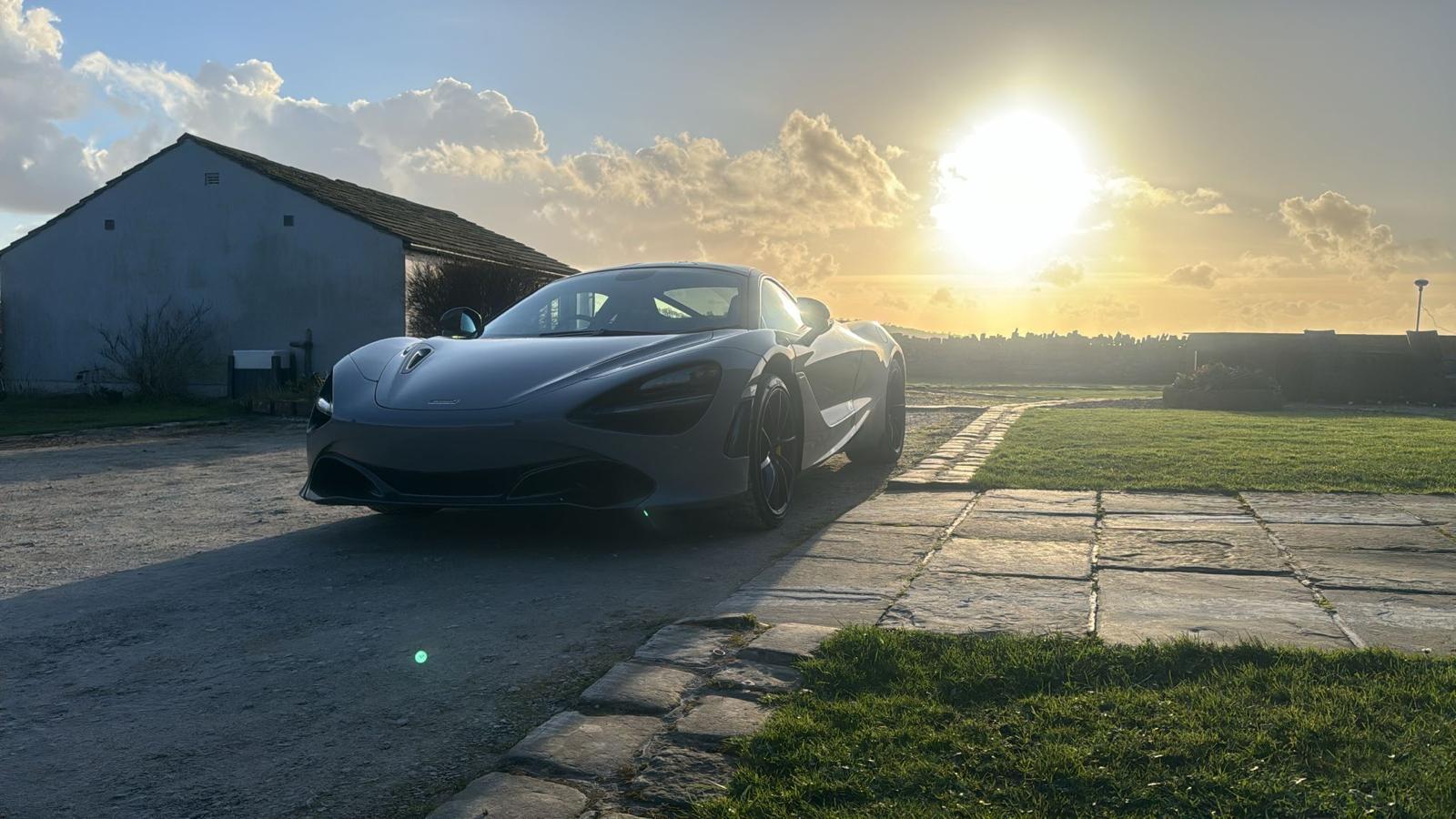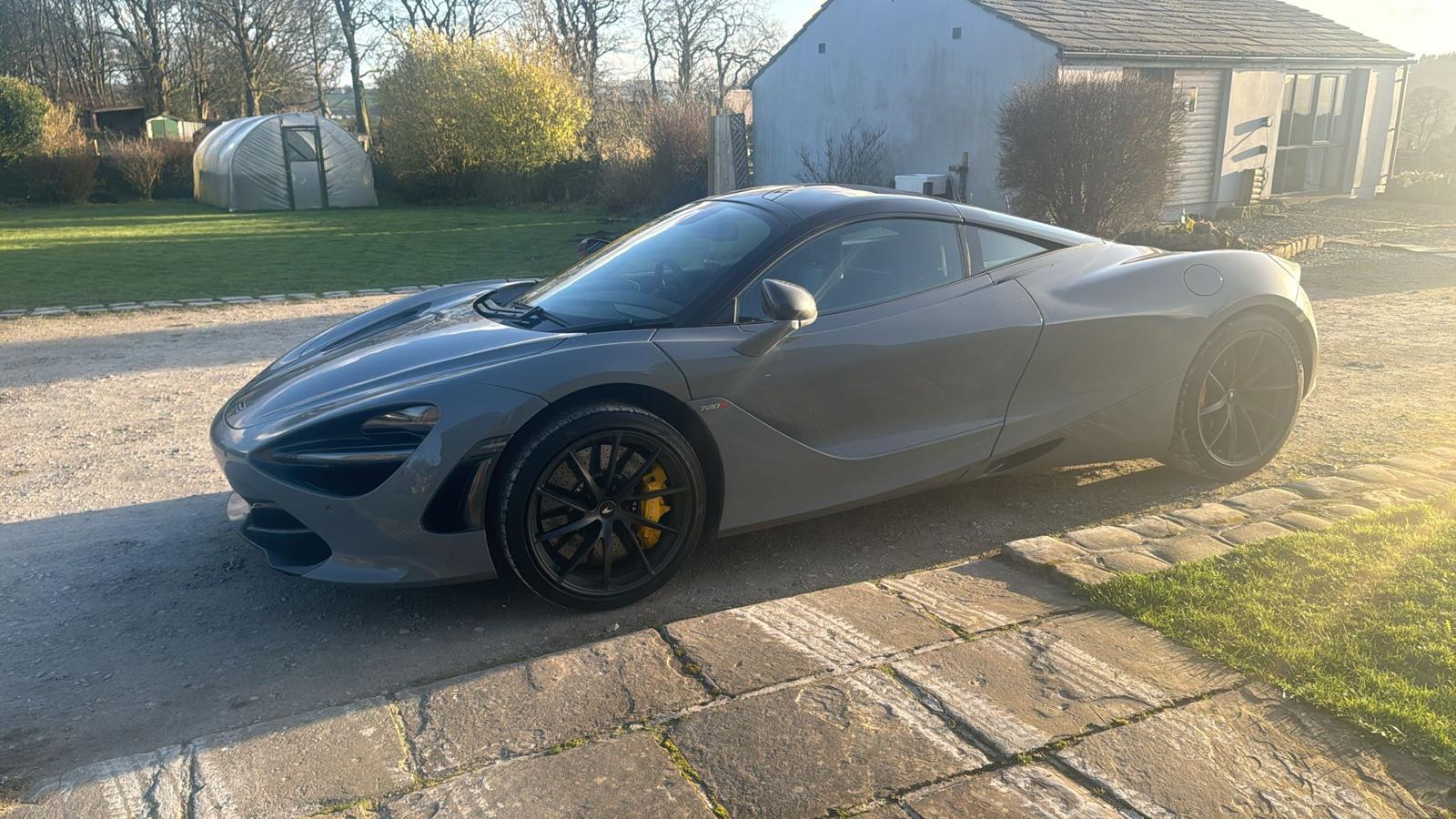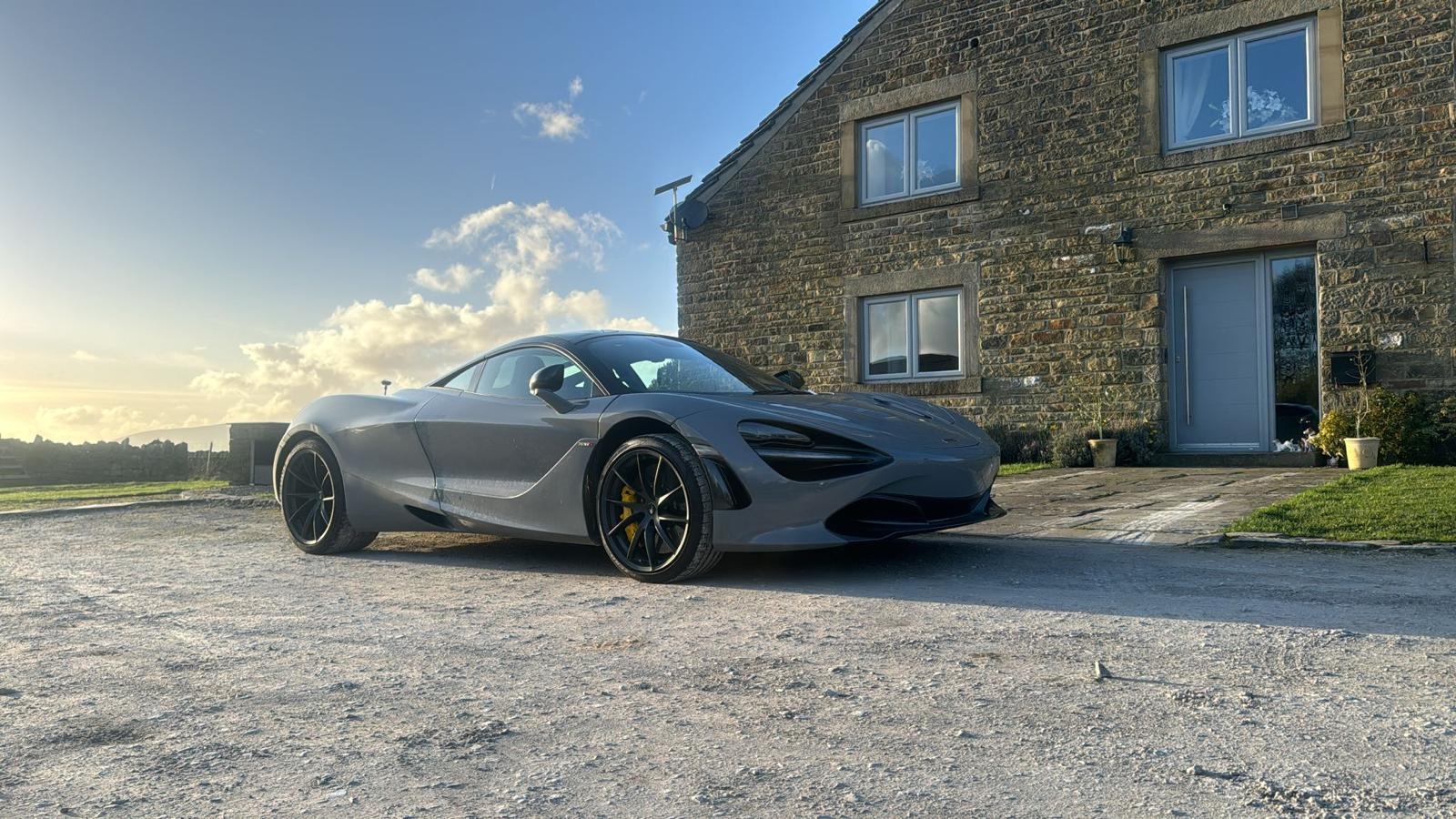
There are some cars that age. There are others — a much smaller number — that simply wait for everyone else to catch up. The McLaren 720S, launched in 2017 and replaced in McLaren's range in 2023, belongs firmly in the second category. Almost a decade on from its first appearance, it still looks more advanced than half the cars rolling out of Maranello and Sant'Agata today.
This article isn't an unbiased one. We own a 720S. We hire it out for weddings, photoshoots and brand work, and we've spent enough time with it now to know its quirks, its strengths, and the small handful of things that we'd happily change. But ownership has only made the case for it stronger — not weaker. Here's why.
The 720S replaced a car nobody really loved
The McLaren 650S, launched in 2014, was a perfectly good car that nobody got particularly excited about. It was fast, it was efficient, it was beautifully engineered — and it looked, frankly, like a slightly improved version of the 12C that came before it. McLaren's "Super Series" cars in the early 2010s were the supercar equivalent of a corporate consultancy: capable, professional, and a bit forgettable.
The 720S changed all of that overnight. When it was unveiled at Geneva in March 2017, it was the first McLaren road car that actually looked like the future rather than describing it on a spec sheet. The hollowed-out headlights — channels that fed cool air into the radiators in place of conventional ducts — were genuinely unlike anything else on the road. The carbon-fibre tub was new. The suspension was new. The engine was a heavily-revised version of the existing twin-turbo V8 with a new crankshaft, new pistons, new cylinder heads, new turbos, and 710 brake horsepower in a car that weighed 1,419 kilograms dry.
For context: a contemporary Ferrari 488 GTB made 661 BHP and weighed 1,475 kg dry. A Lamborghini Huracán made 602 BHP and weighed 1,422 kg. The 720S out-powered both of them, was lighter than the Ferrari, and was the only one of the three that could see out of the rear window properly.
The numbers are still ridiculous, eight years later
Here's where it gets uncomfortable for the more recent competition. The 720S goes from rest to 60 mph in 2.8 seconds. To 124 mph in 7.8. To 186 mph in 21.4. Top speed is 212 mph. These are not 2017 numbers — they are 2026 numbers, and they comfortably embarrass cars launched two and three years after the 720S was already on sale.
But the numbers undersell it. The thing that makes the 720S genuinely remarkable to drive — and to be driven in, which is the side of it our customers experience — is how composed it feels at speeds that should feel terrifying. Most supercars get nervous and tense the harder you push them. The 720S relaxes. It was designed by engineers who clearly believed that the faster you went, the calmer the car should feel. They were right.
"It was the first McLaren road car that actually looked like the future rather than describing it on a spec sheet."
The dihedral doors are not a gimmick
People who have never sat in a McLaren tend to assume that the upward-opening doors are a styling exercise that makes the car impossible to get out of in a normal car park. People who have sat in one know that the opposite is true: the dihedral doors actually make the 720S one of the easiest supercars on sale to get in and out of. The door cuts away part of the roof, the door sill is genuinely low, and the opening is much wider than a conventional door.
The reason matters for our business, because we hire the car for weddings, and the single most-asked question we get from couples is whether the bride will be able to get out gracefully in a dress. The answer is yes, and significantly more easily than she would in a Bentley or a Rolls-Royce, both of which have far higher door sills and far narrower openings.
The doors also do something that no marketing department could have planned for: they create a moment. When the car arrives at a wedding venue and the doors lift, every guest in the car park stops what they're doing and watches. We've shot dozens of arrivals now, and the reaction is the same every single time. It's the closest thing to genuine theatre that a wedding car can produce.
What the press got wrong, and what they got right
When the 720S launched, the motoring press was almost universally complimentary about the engineering and almost universally lukewarm about the soundtrack. The twin-turbo V8 doesn't have the howl of a naturally-aspirated Italian engine. It doesn't shriek at 9,000 rpm. It makes a deep, hard, mechanical noise that's much closer to a fighter jet than a Formula One car, and a lot of journalists at the time felt it lacked drama.
They were wrong, but they were also right. They were wrong because the 720S sounds spectacular in person — just spectacular in a different way to a Ferrari. The bark on a downshift, the turbo whistle on full throttle, the way the noise builds rather than peaks. It's a fantastic mechanical noise. They were right that on a video clip played through laptop speakers, it doesn't have the immediate emotional hook of a 458 Speciale.
For our purposes — which involve a lot of weddings and a lot of photoshoots in quiet rural locations — the slightly more restrained character is actually a benefit. It's not a car that intimidates a wedding venue or annoys a film crew trying to record sound. It's a car that produces an enormous noise when you want it to, and behaves itself the rest of the time.
The interior that quietly redefined the segment
The other thing the 720S did, almost as an afterthought, was raise the standard for supercar interiors across the board. Pre-2017, most supercars had cabins that ranged from "industrial" to "embarrassing." Buttons borrowed from family hatchbacks, plastics that hadn't been updated since the early 2000s, infotainment systems that made you wonder if anyone at the factory had ever used a smartphone.
The 720S arrived with a portrait-oriented infotainment screen, a digital instrument cluster that could fold flat to reveal a minimalist racing display, switchgear that felt like it belonged in a £200,000 car, and a leather interior that was actually competitive with German luxury cars of the same era. None of this was unique any more by 2020 — but McLaren got there first.
What it's like to live with one
This is the part of the article most reviews don't cover, because most reviewers spend a week with a press car and hand it back. We've had ours for long enough to know what daily life is like.
It's surprisingly easy. The ride is genuinely comfortable on most roads, more so than a 911 Turbo S in our experience. The visibility is excellent in all directions. The boot under the bonnet swallows two carry-on bags. The fuel economy is awful (we get about 19 mpg on a careful run, less than half of that if you're enjoying yourself), but no worse than any other supercar with this much power.
The things that catch you out are the tiny ones. The front splitter is closer to the ground than you'd want it to be on speed bumps — McLaren fits a hydraulic nose-lift that raises the front of the car for parking, and you learn very quickly to use it at every car park entrance. The doors swing in an arc that is actually quite tall, so low-ceilinged garages need a bit of thought. People photograph the car constantly; you stop noticing after about a week.
Why it's a future classic
Used 720S values held remarkably well through the early 2020s and have started to climb again. The 765LT (the track-focused variant) is already trading at well above its original list price. McLaren itself replaced the 720S with the 750S in 2023 — a car that is, to be honest, more of a refinement than a replacement, and which most enthusiasts agree is essentially a 720S with a bit more power and slightly different bumpers.
This is usually how future classics are born. A car that was undervalued at the time, replaced by something marginally better, gradually recognised as the high-water mark of an era. The 720S is rapidly becoming exactly that. The combination of the dihedral doors, the genuinely beautiful styling, the power-to-weight figures that still embarrass much newer cars, and the increasing rarity on the used market all point in the same direction.
For now, we get to drive ours every week, hand the keys back to ourselves at the end of the day, and remind ourselves that the best supercar of the last decade was made by a team in Woking and is still — eight years later — quietly waiting for everything else to catch up.
If you'd like to see the 720S up close — book it for your wedding, your shoot, or just stand near it for ten minutes and decide whether the photographs do it justice — get in touch. We're always happy to talk about the car.