If you're reading this, you've probably reached the part of the wedding planning process where you realise that the bridal car is one of the easiest ways to make a big visual statement on a small slice of the budget. A supercar costs less than the venue, less than the photographer, less than the cake on a per-guest basis — and it's the only one of those that will make every single guest stop and stare for a full ten minutes.
But supercar wedding hire is also an unregulated, slightly dodgy corner of the wedding industry. Most operators are part-time. Many don't have the right insurance. A surprising number won't actually own the car you book. We wrote this guide because we get the same questions from every couple, and we'd rather have the answers in one place than answer them piecemeal over WhatsApp at 11pm.
Here's everything we'd tell you over a coffee, in order.
Start with the budget question, honestly
Supercar wedding hire in the North of England runs from around £400 for a short hourly booking up to £2,500+ for a full day with a rare or exotic car. The middle of the market — which is where most of our bookings sit — is between £700 and £1,400 for a half or full day with a chauffeur included.
That's a lot of money, but it's worth comparing to what else you're spending on the day. The average UK wedding now costs over £20,000. The car typically comes in between 3% and 6% of the total. Your venue is probably 30%. Your photographer is 8–12%. The car is one of the smallest line items, and almost certainly the one your guests will photograph most.
If your budget is fixed and tight, be upfront with the supplier — most of us will be honest about what's possible at your number, and a good operator will tell you if they're not the right fit. The worst version of supercar wedding hire is a couple stretching to afford something that doesn't include the things they assumed it would.
Choosing the car (and resisting the obvious choice)
The default supercar wedding choice is a Lamborghini in white or pearl. There's nothing wrong with this — it photographs well, it has the immediate brand recognition, and your aunties will know what it is. But there are a few things worth thinking about before you commit.
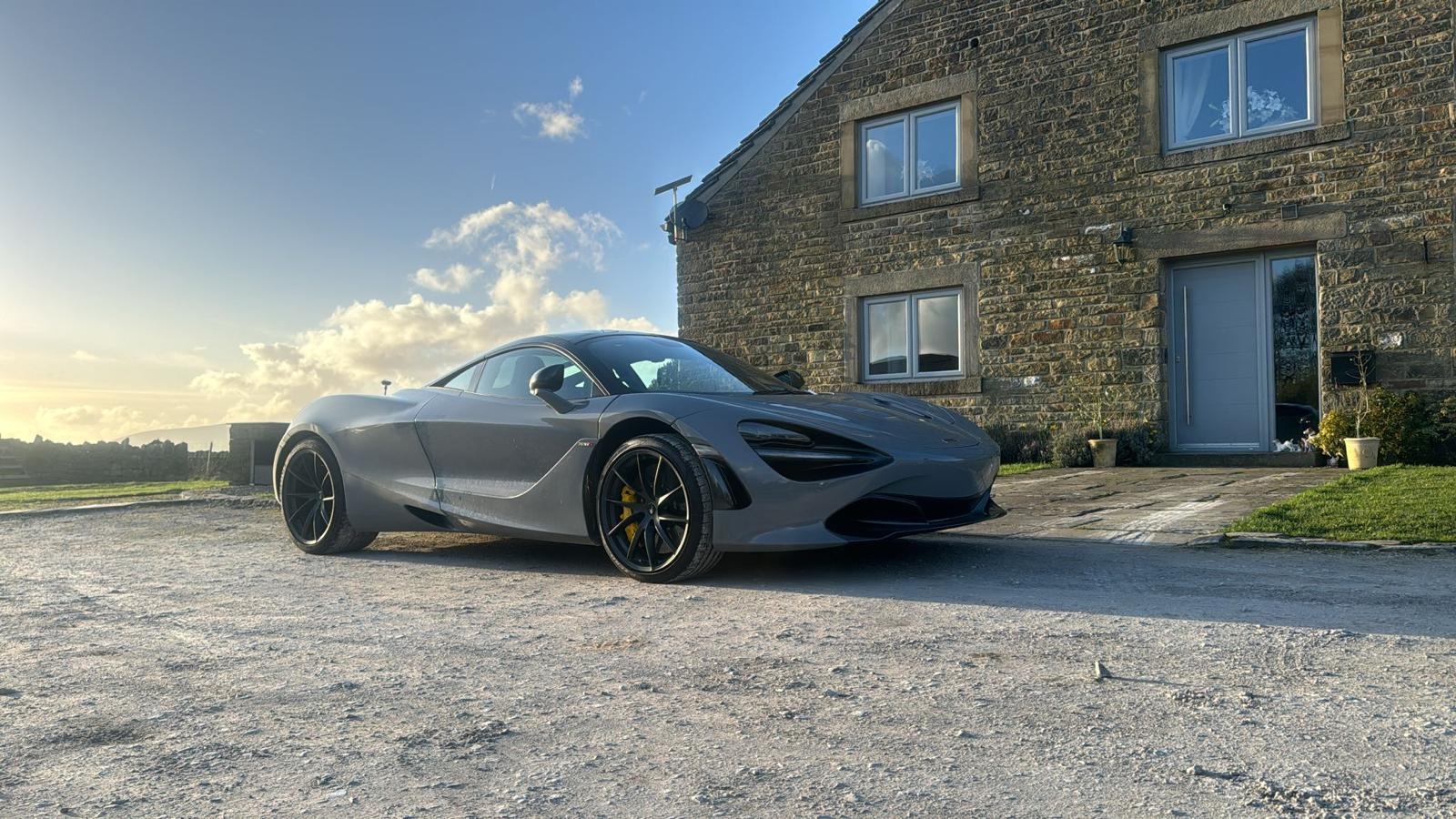
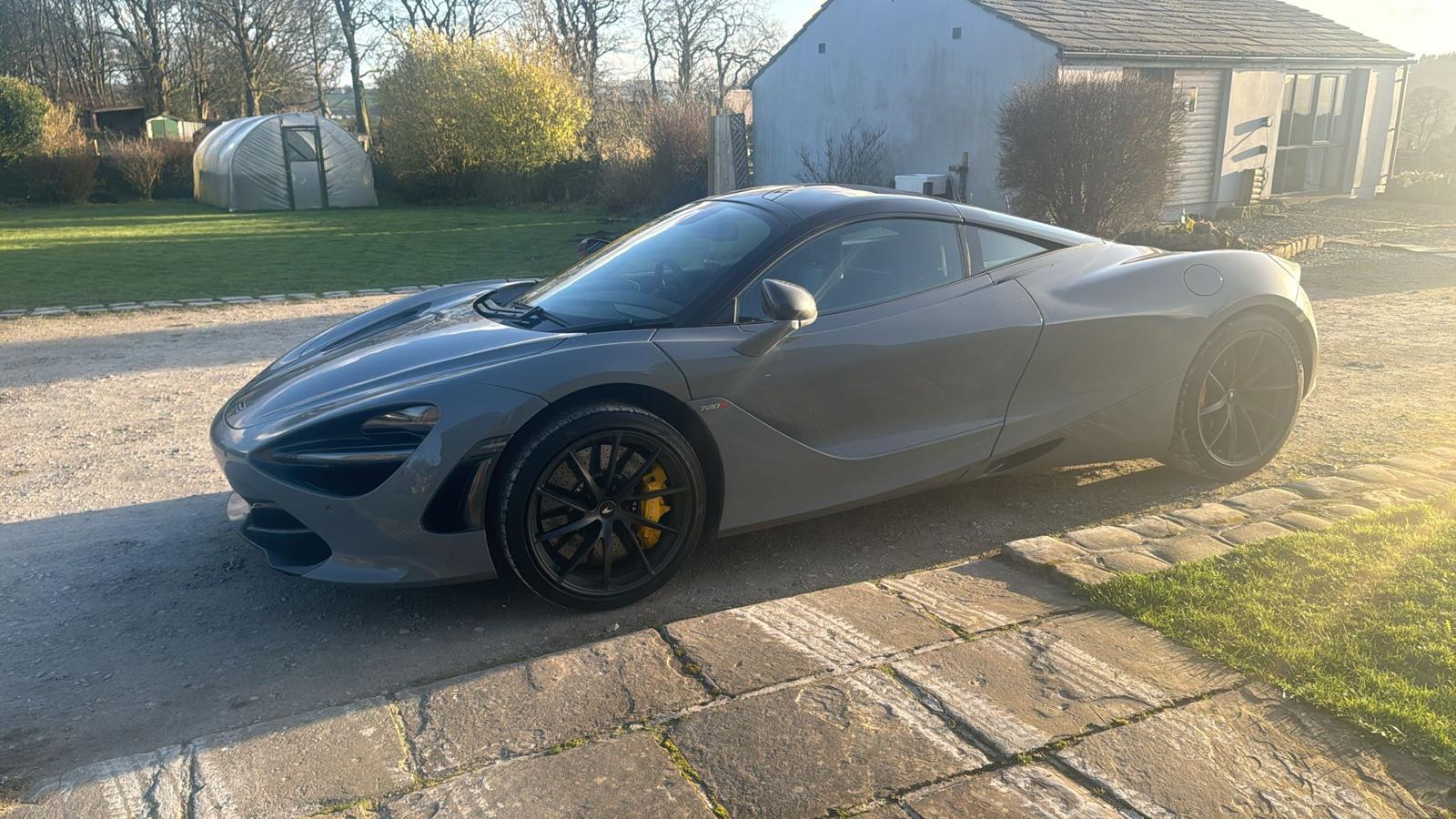
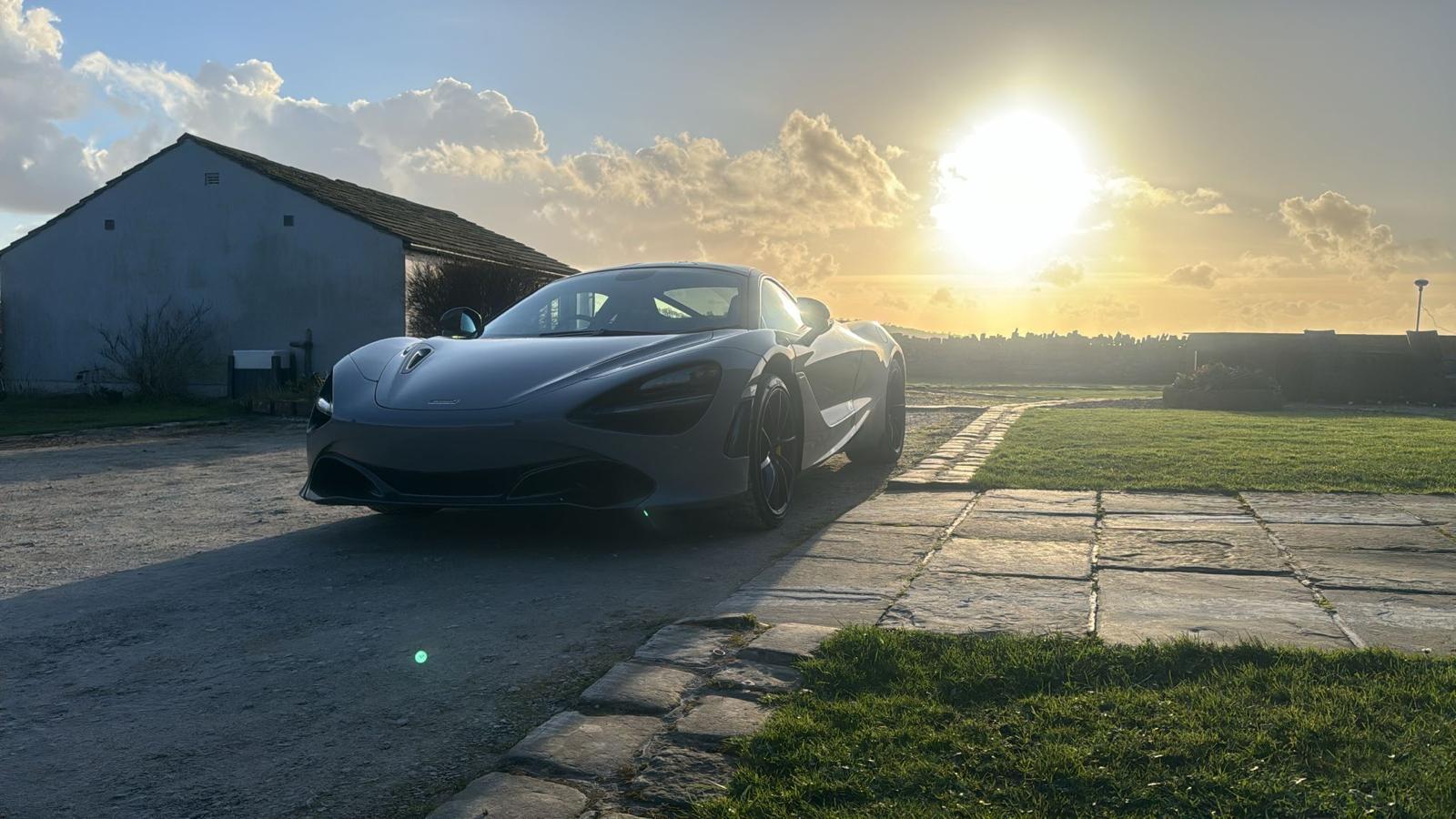
First: every wedding photographer in the country has shot a white Lambo. The photographs are predictable. If you're spending a lot on a photographer, you might want to give them something less obvious to work with. A grey McLaren or a dark blue Aston Martin produces images that look more editorial and less like a stock photo.
Second: think about the colour of the car against your wedding palette. A bright orange supercar fights with most wedding flowers, most bridal parties, and most stone-built Lancashire venues. A more restrained colour — grey, dark blue, deep green, black — sits inside the photographs rather than dominating them. Your photographer will thank you.
Third: consider what the car has to do. If it's just for the arrival and a quick photograph, almost any supercar works. If you want it for couple portraits at a scenic location, the suspension matters more than you'd think — some supercars have aggressive racing setups that are uncomfortable on Lancashire B-roads.
Insurance: the question every couple should ask, and almost none do
This is the most important section in this article. The legal class of insurance you need to carry paying passengers in a vehicle is called "hire and reward". It's a specialist policy, it's expensive, and it's mandatory the moment money changes hands for transporting people.
A standard private car insurance policy explicitly excludes hire and reward. A "business use" policy on a private car also typically excludes carrying paying passengers. A trade policy for a car dealer doesn't cover wedding work either. The only thing that covers it is a specialist hire-and-reward policy, often combined with public liability cover.
Why does this matter to you, the couple? Two reasons.
The first is legal. If something goes wrong on your wedding day — even something minor, like a kerbed wheel or a low-speed shunt — and the operator doesn't have hire-and-reward cover, their insurance will not pay out. They are committing a motoring offence by carrying you, and you may end up tangled in the fallout.
The second is venue access. An increasing number of wedding venues, especially the larger and more reputable ones, will ask any wedding car supplier to provide proof of hire-and-reward insurance and public liability cover before allowing them on site. If your supplier can't produce a certificate, you may discover this on the morning of the wedding.
"Always ask. Any operator who has the right insurance will email you a certificate the same day you ask. Any operator who doesn't will give you a long, vague answer about being 'fully covered.'"
Here are the three questions to ask every wedding car operator before you book:
- Do you carry hire and reward insurance, and can you send me a certificate? (The answer should be yes, and the certificate should arrive within a working day.)
- What's your public liability cover? (You're looking for £5 million as a sensible minimum.)
- Will the car be driven by you or by someone else? (If by someone else, are they a named driver on the policy?)
If you get evasive answers to any of these, walk away. There are operators who do this properly — we're one of them, and we're not the only ones — and you should give your booking to one of those.
The questions almost nobody asks (but should)
Beyond insurance, here are the questions that separate the good operators from the average ones.
"Will the car be exclusively mine on the day?"
Some operators take multiple wedding bookings on the same day, juggling drivers and trying to slot one wedding's photos in between two others. This is fine in principle but stressful in practice — the car arrives late, it's not been re-detailed between bookings, and the chauffeur is in a hurry. We only take one wedding per day. Ask, and ask the answer to be in writing.
"What happens if the car breaks down?"
Supercars are mechanically demanding and things do occasionally go wrong. A good operator has a written contingency plan — either a backup car of equivalent class on standby, or a relationship with another operator who can step in, or a clear refund policy. A bad operator will tell you "it's never happened before" and look offended that you asked.
"Can we have a photo session with the car somewhere scenic?"
Most full-day wedding bookings include some time for photographs, but the quality of the photo time varies wildly. The best operators will recommend specific locations near your venue — a stone bridge, a piece of moorland, an avenue of trees — and will drive you and your photographer there as part of the booking. Ask whether they'll do this, and where they'd suggest. If they have suggestions, they've thought about it before.
"What's included in the price, and what's extra?"
The headline price often excludes things you'd expect to be in there: travel beyond a base radius, extra time, fuel surcharges, end-of-day cleaning, ribbon and decoration, refreshments. Get a written quote that itemises everything, and read it carefully. You don't want surprise charges on a wedding morning.
"Have you been to my venue before?"
If yes, brilliant — they'll know the access, the photo spots, the parking arrangements and the venue coordinator. If no, ask whether they'll do a recce in advance. We do recces free of charge for full-day bookings — it takes us an hour and saves an enormous amount of grief on the day.
The mistakes we see most often
We've now seen enough wedding bookings — both ones we've delivered ourselves and ones couples have told us about from previous suppliers — to spot the patterns.
Booking too late
Saturdays in May, June, July, August and September are the bottleneck. The good cars and the good operators are typically booked 6–12 months in advance for peak weekends. If you've got a specific date in mind, enquire as early as you possibly can. Off-season weekends and weekday weddings are much easier.
Underestimating travel time
A supercar isn't faster than a normal car on a busy A-road; if anything, it's slower because you can't risk getting it stuck in traffic. Build realistic buffers into your timing, especially if your bridal preparation venue and your ceremony venue are more than 30 minutes apart. We always plan to arrive 15 minutes before we're needed and tuck the car somewhere out of sight until the moment.
Forgetting about the photographer's needs
Brief your photographer early about the car. They will want to know what colour it is, what the doors do, and where you're hoping to take photos. Some photographers will quietly factor in an extra 20 minutes for car shots; others won't, and you'll find the time gets eaten by group photos and you never get the shot you wanted. Tell them at the planning stage.
Not thinking about the dress
Some dresses are easier to get in and out of supercars than others. Big structured ballgowns with cathedral trains are doable in a McLaren (the dihedral doors actually help) but require some choreography. Slim sheath dresses are effortless. If you have a particularly dramatic dress, mention it during the booking — we'll plan the angle of approach, where we park, and how we time the door opening.
Ignoring the weather contingency
You're getting married in the North of England. There's a non-trivial chance it'll rain. A good operator carries large golf umbrellas, plans drop-off points to minimise distance from the venue door, and will reposition the car for photographs if the weather changes. Ask what their plan is.
What a really good wedding supercar booking looks like
To finish, here's what a properly run booking should feel like from your end as the couple:
- You get a written quote within 24 hours of enquiring, with all costs itemised.
- The operator sends you their hire-and-reward insurance certificate without you having to chase.
- You have a single point of contact — ideally the owner — from booking to wedding day.
- A site visit or recce happens 4–8 weeks before the wedding.
- The car arrives 15 minutes early on the day, fully detailed, with the chauffeur in a suit.
- The chauffeur introduces themselves to your photographer and venue coordinator immediately.
- The photo session at your venue is calm, well-positioned, and produces images that you actually use in your album.
- The car leaves on time, the invoice has no surprises, and the operator emails you the following week to thank you and ask if they can use any of the photos with credit.
If that's the experience you want, give us a shout. If you go with someone else, that's fine too — but use this list as a checklist. Your wedding day is too expensive to leave the most photographed moment of it in the hands of someone who hasn't thought through the basics.
Planning a Lancashire wedding and want a no-pressure conversation about whether a McLaren 720S is right for your day? Send us a quick enquiry — we'll come back within a working day with availability and a precise quote.